

41-43 Linnaean St., Cambridge, MA


Scope of Work
• Repointing brick
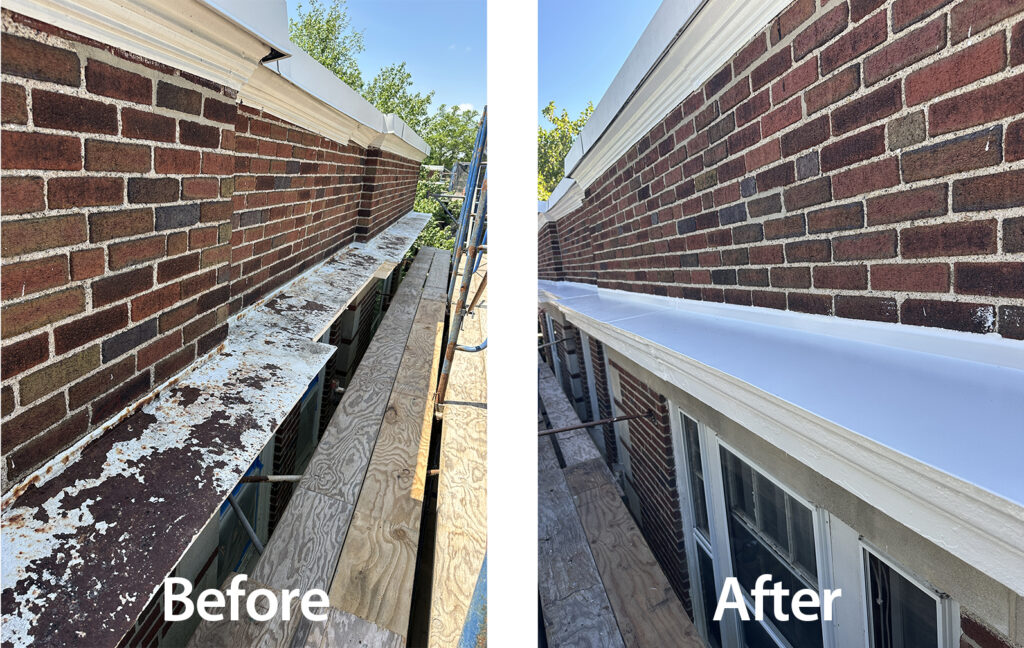
• Repair, replacement of the metal cornice
• Cleaning of brick and cast-stone masonry
• Repairs to cast-stone masonry
• Replacement of steel lintels
• Partial rebuilding of chimneys
• Application of perimeter sealant to all windows
• Painting steel lintels
Challenges
Peabody Court is listed on the National Register of Historic Places, so all work had to maintain the historical integrity of the building. After work began, the metal cornice was found to be severely damaged in several locations. Sections that could not be repaired were shop fabricated and installed in place.
Preserving Historic Integrity at Peabody Court
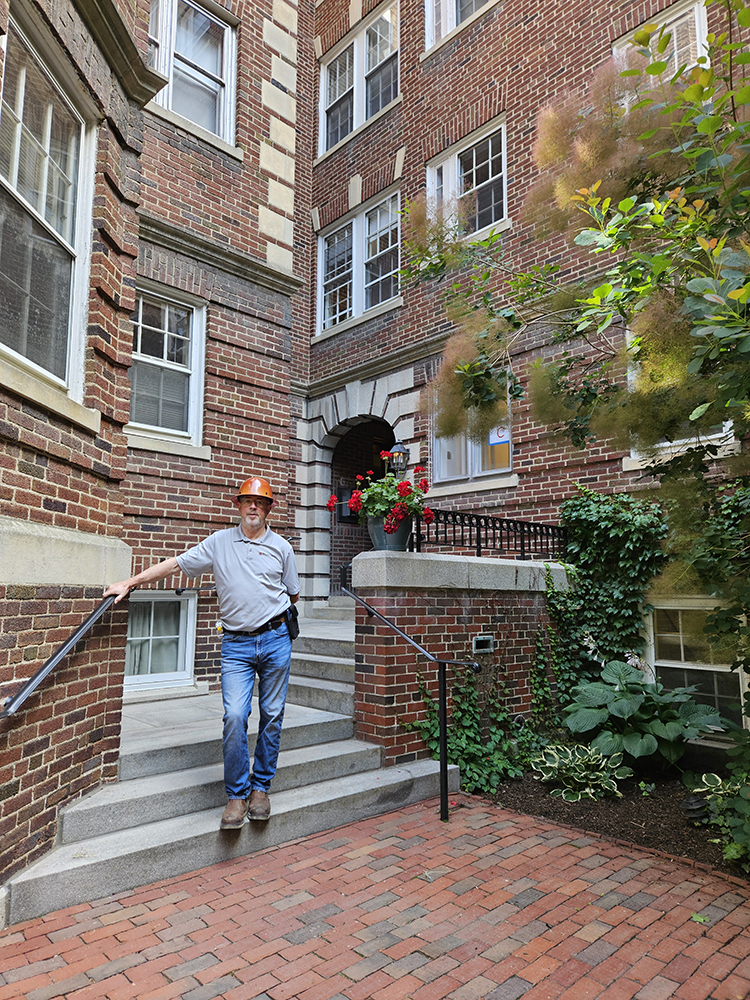
Residents of Peabody Court take pride in the condominium’s historic character.
Built in 1922, the five-story, 67-unit condo is mostly owner-occupied. Listed in the National Register of Historic Places, its nomination emphasized that “the building retained high levels of integrity in location, design, materials, workmanship, and feeling, with no alterations that had adversely affected its historic qualities.”
Choosing the Team
Current owners, committed to preserving the building’s integrity, recognized the need for restoration work but wanted to ensure it was completed to the highest standards. Their desire to get the scope, approach and execution right resulted in the project being postponed for several years, according to Property Manager Kirsten Bulger, co-founder of Renzi Bulger Group, LLC.
Given that reluctance, choosing the restoration team was an important first step. In addition to Kieran Fitzgibbon, principal of Statewide RM, and Bulger, the restoration team included Lisa Harrington, Director of Building Conservation Associates, Inc.’s New England Office in Newton Centre, who designed the work and oversaw the project.
BCA assessed the building’s restoration needs and, working with the Board of Trustees and the property manager, broke the project into phases. Phase One included masonry cleaning, repointing and repairing brick and cast-stone masonry, repairing the cornice, replacing damaged steel lintels and partially rebuilding chimneys. Statewide also applied perimeter sealant to all windows and painted the steel lintels.
Renzi Bulger has worked with Statewide RM on numerous projects, but BCA had no prior experience working with Statewide. Harrington is cautious about retaining contractors she has not previously worked with, but Statewide was chosen after being highly recommended by Bulger. Harrington has no regrets.
“I have to say, in 25 years of doing this, Statewide was the best restoration contractor we have ever worked with,” she said.
She was especially impressed by the way Fitzgibbon organized his company’s work. She took over the project when the initial BCA project manager went on maternity leave, but Fitzgibbons’ weekly job meetings enabled her to catch up quickly.
Each week, Fitzgibbon was on site, outlining what his team expected to accomplish. If rain or other factors prevented completion of weekly goals, the work schedule was adjusted accordingly.
“What impressed me was the organizational way of how the project was executed,” Harrington said. “There was a lot of oversight. A lot of good information was shared back-and-forth. Kieran was so communicative. He didn’t make any assumptions.”
And while many contractors send in “the B team” once work begins, Statewide did not. In addition to Statewide’s employees, Fitzgibbon brought in skilled subcontractors. He also spent plenty of time on site and communicated frequently with her.
Pioneering Construction
Located at 41-43 Linnaean St. in the Avon Hill area of Cambridge, Peabody Court was designed by Hamilton Harlow, who pioneered the design of large apartment buildings in Cambridge. At the time, the population was growing quickly and, with Harvard University and other colleges nearby, the focus was on upscale multi-family housing.
The Colonial Revival building is H-shaped to create two deep courtyards, providing opportunities for socialization, while allowing sunlight to bring fresh air and warmth to all units. The building also features many cast-stone elements, including corner quoins, window sills and keystone lintels.
One challenge was to restore masonry in a manner that would blend new and old masonry without looking like a patchwork. Being more than a century old, the brick and mortar had weathered over the years, so matching the existing color was difficult.
“There was a lot of spot repointing and patching to do, so matching the old mortar and brick was a huge priority,” Bulger said.
Statewide was up to the task and “even the most difficult critics had their concerns addressed,” she said. “They came back and gave the work rave reviews.”
Unanticipated Damage
BCA initially wanted to use an aerial lift to inspect the roof and other areas not visible from street level, but there were too many utility lines in the way, so a close inspection was delayed until scaffolding was erected.
Cleaning and painting the cornice was initially part of the project, but during the inspection from the scaffold, the team found that the cornice was too damaged and part of it had to be refabricated. In addition, the wood holding the cornice in place had rotted and had to be replaced.
The inspection also identified a few cast stone windowsills that had to be replaced. Initially, they appeared to be cracked, but closer inspection uncovered more extensive damage.
The most difficult part of the project was the partial replacement of the damaged cornice, Bulger said. The scope of the work had to be defined, drawings had to be prepared and a vendor capable of doing the work had to be located.
Crocker Architectural Sheet Metal Co., Inc., Oxford, Mass., was retained to remove and replace damaged sections, and fabricate profiles to match the original. Samples were initially installed and reviewed for approval.
Even with the unanticipated cornice fabrication, the work was completed within six months, as planned. The fabrication work and other changes boosted the price from about $900,000 to $1 million.
Collaboration Was Key
All parties were pleased with the results. Bulger attributes the project’s success to the restoration team’s collaboration.
“The project was completed as smoothly as it could possibly go,” Bulger said. “The big thing for me was the collaboration and teamwork. Everyone did a great job working together. Everything was on point.”
Harrington agreed.
“Kieran did everything right,” she said. “He set a high standard. There was no real punch list, because Statewide captured everything. That doesn’t happen very often. I want Statewide to bid on all of our future projects!”
Phase 2, which will focus on the courtyards, is being planned for 2027.

